
 Prof. Elina Ilén
Professor, Universitat Politècnica de Catalunya, BarcelonaTech
Prof. D.Sc. (Tech.) Elina Ilén has years of experience in leading, researching, developing, educating and commercialising functional and smart textiles and textile-based wearable technology both in business and academia. Since 2018 she has been developing textile based wearable technology for medical research and diagnostics by detecting neurological disorders of infants and integrating solar cell technologies into textiles to create autonomously operating textile electronics products in Aalto University, Department of Design, Finland. In addition to research and teaching her current work in Universitat Politècnica de Catalunya, BarcelonaTech, Spain includes the leading of research projects from research idea to a consortium constructing and applying the funding to implementing and managing the projects. Moreover, she provides product design research and development services globally via her own company, Planno. She got her M.Sc in Fiber, Textile and Clothing Science at Tampere University of Technology, Finland 1999 and her dissertation (2015) from Tampere University of Technology discusses decontamination of textile body sensors for the medical environment. She is a co-inventor in five patents concerning textile based wearable electronics. She is keen on designing and developing textile-based products that support their users’ wellbeing and that have a demonstrable societal impact added with high enthusiasm for resource-wise material use and circular economy.
Presentation Title:
-
Longevity and End-of-Use Aspects of E-Textile Applications
Presentation Summary:
-
The textile and electronics industries are both well-known as one of the most polluting industries in the world. E- textiles combine both industries aiming for high value-added products for instance to improve user’s wellbeing and safety. Even though e-textiles have been a hot topic over two decades which can even save user’s lives, less research and concern are stressed to the longevity and end-of-use aspects of those products. The presentation comprehensively discusses the state of art of longevity and reviews the end-of-use aspects in current e-textile research. It also discusses the different integration levels of electronics with textiles and how that relates to resource wise usage of materials and recyclability of the end-product. It highlights the challenges in developing more sustainable and longer lasting e-textile applications but also provides considerations for the researchers, how to tackle these challenges better in the future. The presentation uses the case example of sun powered textile application in concretizing the context of longevity and end-of-use or e-textiles.

Michael Schneider
Managing Director, BORN
Michael Schneider is the owner/managing director of BORN, a knitting company focused in smart and e-textiles with 10+ years of experience in the development and production of textiles with integrated electronics. Michael has studied information technologies and worked with Siemens as a development engineer for 10 years. In 2010 he founded a sports compression gear brand called ENTORCH and based on the knowledge of compression started working in the smart and e-textiles environment. Recently Michael founded the Smart Textiles Hub – a development center specialized in Smart Textiles.
Presentation Title:
- Production of E-Textiles – Challenges & Best Practice
Presentation Summary:
- The production or manufacturing of Smart Textiles is seriously different from the previous methods of textile production. This is where two worlds meet. This means that textile producers must be open to new production methods and processes and machines. Much more than ever before, a very close interaction with the customer is necessary already in the development phase to achieve the best product. In addition, there are new norms and standards as well as certifications that must be adhered to on the part of developers and producers. In this presentation we share our experience from the last years as well as our best-practice we have learned from it.

Chris Jorgensen
Director, Technology Transfer, IPC
Chris Jorgensen is Director Technology Transfer with IPC, a worldwide trade association for the electronics interconnect industry. As a member of IPC’s technical department, Chris’s primary responsibility is staff liaison to standards development committees. These committees include the IPC D-70 E-Textiles Committee, IPC D-60 Printed Electronics Committee and working groups developing standards as part of IPC’s Factory of the Future initiative. Chris has more than 20 years of experience in standards development, nonprofit management and marketing. He received his degree in communications from Columbia College in Chicago.
Presentation Title:
- How the Global E-Textiles Industry Is Addressing Reliability of Product Through Open International Standards
Presentation Summary:
- As the markets for e-textiles continues to expand, so too will the need for established standards for demonstrating reliability and reproducibility of product. These standards not only need to address the various integration technologies for e-textiles – woven, knitted, braided, embroidered, printed, etc. – but they will also need to be usable across product types – wearable, automotive, industrial, etc. – and market areas – defense, medical, consumer, etc. In this presentation, Chris Jorgensen, staff liaison for the IPC E-Textiles Committee, will discuss how hundreds of volunteers from the global e-textiles industry are developing open international standards to meet these needs. He will also explain importance of open international standards, how they are developed, the cost-saving benefits they have to industry, how they improve reliability and speed time to market, as well as dispel some myths regarding standards. Specific to their work, Chris will spotlight several key committee undertakings:
- How one committee has established generic classifications of e-textiles wearables products to benefit industry
- New Test Methods under development and how they will ensure consistent reliability testing from base e-textile to e-textiles wearables system, including washability
- Test standard for conductive yarns to build a library of standards-based specification sheets
- New activities for embroidered e-textiles
Additionally, Chris will discuss IPC’s Factory of the Future initiative and how activities there involving Digital Twin, Model-Based Definitions for Digital Twin, Cybersecurity in Manufacturing, Traceability, Connected Factory will benefit the e-textiles industry as it expands to next-generation manufacturing of next-generation product.

Prof. John Ho
Associate Professor, National University of Singapore
Prof. John S. Ho is an Associate Professor in the Department of Electrical and Computer Engineering at the National University of Singapore. He received his PhD in electrical engineering at Stanford University where he was a National Defense Science and Engineering Graduate Fellow. He is a recipient of the NRF Fellowship, NUS Young Researcher Award, and Singapore Young Scientist Award, and has appeared on the MIT TR35 Innovator Under 35 Asia and Forbes 30 Under 30 Asia lists. His research focuses on developing medical devices that can wirelessly monitor and intervene wherever and whenever medical conditions occur in the body. He is currently on leave from academia to conduct research at Meta Reality Labs in California.
Presentation Title:
- Wireless Connectivity with Wearable Metamaterials
Presentation Summary:
- Wireless technologies underlie the connectivity that is the hallmark of modern life. Textiles are adopted by all societies, cover most of the body, and are present in all of our daily lives. Could textiles be used to provide new forms of connectivity for sensing and interaction with the human body? This talk will describe our recent work on wirelessly functional textiles that interact with the user through technologies such as Bluetooth, Wi-Fi, and NFC. Using the electronic textile toolkit, we show that clothing can be designed to boost wireless signals between wearable devices, power battery-free sensors around the body, and sense changes in the wireless environment, all without any physical connections between clothing and technology.

Marina Toeters
Fashion Tech Designer, by-wire.net
Marina Toeters is a Red Dot winning Fashion Tech Designer. She operates on the cutting edge of technology and fashion design. Through her business by-wire.net she stimulates collaboration between the fashion industry and technical innovators for a relevant fashion system and supportive garments for everyday use. She advises – via prototyping and a research through design approach – on product development. She designs and develops concepts to inspire the world how fashion could be. As a teacher, coach and researcher, she works for a fashion department (HKU) and industrial design faculty (TU/e). In 2019 Marina edited the book Unfolding Fashion Tech: Pioneers of Bright Futures and opened the Fashion Tech Farm, a studio, incubator and small-scale production facility for innovative fashion, based in Eindhoven, The Netherlands.
Presentation Title:
- Unfolding Fashion Tech: About Prettiness, Medical Goods, Technicalities, Usability and Business.
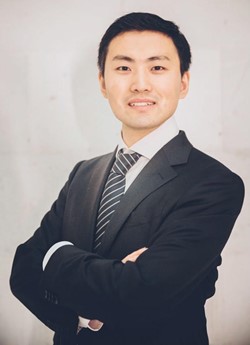
Dr. Jun Chen
Assistant Professor, UCLA
Dr. Jun Chen is currently an Assistant Professor in the Department of Bioengineering at the University of California, Los Angeles. His research focuses on nanotechnology and bioelectronics for energy, sensing, and therapeutic applications in the form of smart textiles, wearables, and body area networks. He has published two books, 240 journal articles, with 140 of them being corresponding authors in Chemical Reviews (2), Chemical Society Reviews (2), Nature Materials, Nature Electronics (3), Nature Communications (2), Science Advances, Joule (3), Matter (6), Advanced Materials (8), and many others. His works were selected as Research Highlights by Nature and Science seven times and covered by world mainstream media over 1,200 times in total, including NPR, ABC, NBC, Reuters, CNN, The Wall Street Journal, Scientific American, and Newsweek. He also filed 14 US patents, including one licensed. With a current h-index of 85, Dr. Chen was identified to be one of the world’s most influential researchers in the field of Materials Science by the Web of Science Group. Beyond research, he is an associate editor of Biosensors and Bioelectronics and Advisory/ Editorial Board Members of Matter, Nano-Micro Letters, Materials Today Energy, Cell Reports Physical Science, and The Innovation. Among his many accolades are the ACS PMSE Young Investigator Award, Materials Today Rising Star Award, Advanced Materials Rising Star, ACS Nano Rising Stars Lectureship Award, Chem. Soc. Rev. Emerging Investigator Award, Fellow of the International Association of Advanced Materials, Thought Leaders by Azo Materials; 30 Life Sciences Leaders To Watch by Informa, UCLA Society of Hellman Fellows Award, Okawa Foundation Research Award, JMCA Emerging Investigator Award, Nanoscale Emerging Investigator Award, Frontiers in Chemistry Rising Stars, IAAM Scientist Medal, 2020 Altmetric Top 100, Top 10 Science Stories of 2020 by Ontario Science Centre, Highly Cited Researchers 2019/2020/2021 in Web of Science, etc.
Presentation Title:
- Smart Textiles for Personalized Health Care
Presentation Summary:
- There is nothing more personal than healthcare. Health care should move from its current reactive and disease-centric system to a personalized, predictive, preventative, and participatory model with a focus on disease prevention and health promotion. As the world marches into the era of the Internet of Things (IoT) and 5G wireless, technology renovation enables the industry to offer a more individually tailored approach to healthcare with better health outcomes, higher quality, and lower cost. However, empowering the utility of IoT-enabled technologies for personalized health care is still significantly challenged by the shortage of cost-effective on-body biomedical devices to continuously provide real-time, patient-generated health data. Textiles have been concomitant and played a vital role in the long history of human civilization. Incorporating sensing and therapeutic capabilities into everyday textiles could be a powerful approach to the development of personalized healthcare. Merging biomedical devices and textiles becomes increasingly important owing to the growing trend of IoT since it could serve as on-body healthcare platforms with incomparable wearing comfort. In this talk, I will introduce our current research on smart textiles for biomonitoring, therapeutics, power supply, and textiles body area network for personalized health care.

Martin Ashby
Chief Innovation Officer, Prevayl Limited
Martin has spent his career in sports and consumer retail brands managing teams that develop, source and build product ranges for the consumer. At a chance meeting with a friend in a coffee shop in 2013, he chose to leave the corporate world behind and enter the world of wearable technology and start-ups. He’s spent the last 9 years developing garments that can read data from the body, transforming it into insight that educates, empowers and adds value to the wearer.
Presentation Title:
- The Challenges of Bringing Garment Based e-Textiles to the Mass Consumer Market
Prof. Strahinja Dosen

Full Professor in Rehabilitation Robotics, Aalborg University (Denmark)
Strahinja Došen received the Diploma of Engineering degree in electrical engineering and the M.Sc. degree in biomedical engineering from the Faculty of Technical Sciences, University of Novi Sad, Novi Sad, Serbia, in 2000 and 2004, respectively, and the Ph.D. degree in biomedical engineering from Aalborg University, Aalborg, Denmark, in 2009. Between 2011 and 2017, he was a Research Scientist with the University Medical Center Göttingen, Georg-August University, Göttingen, Germany. He is currently an Associate Professor with the Department of Health Science and Technology, Aalborg University. He has authored or coauthored more than 65 manuscripts in peer-reviewed journals in the field of biomedical engineering. His research interests include movement restoration and control, rehabilitation robotics, sensory feedback, and human-machine interfacing for sensory-motor integration.
Presentation Title:
- Textile electrodes for practical application of myoelectric control in human-machine interfacing
 E-Textiles 2026