
 Phil Kunovski
Chief Technology Officer, Kymira
As KYMIRA’s CTO, Phil leads R&D into new smart textile platforms for biosensing within sports, fitness and medical markets. Phil holds an MEng in Electronic Engineering and Cybernetics from the University of Reading. He has recently completed his PhD in wireless power transfer for wearable monitoring solutions from the University of Reading, investigating cutting-edge textile printed-based technologies for the wearables industry. Phil has skills in product development from initial concept through to prototyping, testing, design for manufacture, writing and licensing of patents, production and marketing; runs several collaborative, industrial and academic projects; and oversees KYMIRA’s several R&D programmes.
Presentation Title:
- Biomonitoring in Professional Sports and Medical through Smart Garments
Presentation Summary:
- KYMIRA is as smart garment company founded in 2013 and operates in the Health and Fitness market with their clothing brands, KYMIRA Sport and KYMIRA Medical. Since 2016, KYMIRA has been conducting new R&D into electronic(e)-textiles for primary usage within the medical and healthcare markets. KYMIRA and partners are developing innovative techniques to embedding printed electronics into clothing for scalable manufacture and incorporating sensors that can record biodata for monitoring applications. This platform technology is non-invasive, washable, durable and comfortable to wear, and has the real potential to bring about significant change to the healthcare sector. Following on from a webinar in April, KYMIRA’s CTO, Phil Kunovski will present an updated talk on the current state of the art at KYMIRA, exploring applications within their target markets of professional sports and healthcare. They are particularly interested in forming new partnerships that could help increase their smart garment platform’s capabilities and credibility. These could include partnerships focused on developing
- new biosensors, power systems or communications that have the potential to be incorporated into clothing, as well as,
- AI-driven data analytics that could generate insights from the unprecedented amount of biodata being recorded through the smart garments.
If this sounds like an area of your research or business, come join the E-textiles 2021 Conference to learn more about KYMIRA and join them in solving technical and commercial challenges within the field of biomonitoring smart garments.
 Prof. Monica Craciun
Professor in Nanoscience and Nanotechnology, University of Exeter
Prof Craciun gained a PhD in Applied Physics in 2006 from the Kavli Institute of Nanoscience, Delft University of Technology (The Netherlands). She also holds an MSc in Materials Physics (Joseph Fourier University, Grenobe, France) and an MSc in Materials Engineering (Catholic University Leuven, Belgium). From 2006 to 2007, she was postdoctoral researcher in the Nano Electronics Group / MESA+ Institute for Nanotechnology at the University of Twente (The Netherlands). From 2007 to 2009 she held a fellowship of the Japanese Society for the Promotion of Science at Tarucha Laboratory for Physics and Technology in Nanostructures at the University of Tokyo, Japan. Prof Craciun joined the University of Exeter in 2010 as research fellow, was appointed to Senior Lecturer in 2012, to Associate Professor in 2014 and to her current role in 2017.
Her academic work spans from applied research in nanotechnology, electronic and optoelectronic devices to fundamental research in nanoscience (quantum phenomena, molecular electronics, nano electronics, spintronics) and materials science. She currently leads a group focusing on fundamental aspects of two-dimensional materials, as well as their use in emerging technologies such as electronic textiles, highly efficient solar cells, light emitting devices, and multifunctional smart coatings. The research outputs of her group include over 200 publications in leading international journals (e.g. Nature & Science family journals, Advanced Materials, Nano Letters, ACS Nano) and several papers ranked in the top 1% in Materials Science, Engineering and Physics.
Presentation Title:
- Integration of graphene in textiles fibers and fabrics for wearable electronics and smart textiles
Presentation Summary:
- Graphene materials are emerging systems for wearable applications due to their exceptional properties such as high electrical conductivity, optical transparency and mechanical flexibility. Such properties offer opportunities for the seamless incorporation of electronic devices into textiles, the ultimate form of electronic textiles and the most ambitious challenge for longer-term innovation. This capability will project electronic textiles to new frontiers, unlocking a future with a redefined interaction between human and technology, in which interacting with health monitoring devices will be as simple as getting dressed.In this talk, I will give an overview of our developments in the integration of graphene materials in textiles for wearable sensors and light-emitting devices. This includes the use of ultrathin graphene layers to create conductive textile fibers [Sci. Rep. 5, 9866 (2015) & Sci. Rep.7, 4250 (2017)] and fabrics [J. Phys. Mater. 4 014004 (2021)]. We pioneered a new technique to create graphene electronic textile fibers that can function as touch-sensors and light-emitting devices [npj Flexible Electronics 2, 25 (2018)], demonstrated fabric-enabled pixels for displays and position sensitive functions, and demonstrated low-operating voltage carbon–graphene e-textile for temperature sensing [ACS Appl. Mater. Interfaces 12, 26, 29861 (2020)], a gateway for novel smart textile applications.
 Prof. Andrew Cobley
Professor of Electrochemical Deposition, Coventry University
Prof. Andrew Cobley began working in printed circuit board (PCB) manufacture in 1986 for British Aerospace (Stevenage). Subsequently, in 1989, he joined Shipley Europe Ltd where he installed PCB manufacturing processes at some of the largest electronic manufacturers in Europe including Siemens, Sony and Ericsson. Andrew obtained his PhD from Loughborough University in 2002 and joined Coventry University in 2006 where he is now a Professor of Electrochemical Deposition and leader of the Functional Materials Research Group. During his academic career he has led several externally funded projects including, most recently, the €6 million EU H2020 project MATUROLIFE. He has over 40 academic publications, is a named inventor on over 30 patents and has presented at more than 50 International conferences. Prof. Cobley is an evaluator for Innovate UK and the European Commission and is a Council Member for the Institute of Circuit Technology. He is a Chartered Chemist and Fellow of the Royal Society of Chemistry.
Presentation Title:
- The MATUROLIFE project. A multi-disciplinary success story for the development of (e-textile enabled) assistive technology for older-adults.
Presentation Summary:
- The growth of the E-Textiles sector has inevitably led to interaction between disciplines such as materials science, electronic manufacturing, design and fashion. These disciplines have diverse methodologies and ‘languages’ and developing approaches to make them successfully collaborate is key to the success of E-Textiles. This is exactly the challenge (and opportunity) faced by the MATUROLIFE project (Metallisation of Textiles to make Urban Living for Older People more Independent and Fashionable). Led by Coventry University, this €6 million project involved collaboration between 20 partners across 9 European countries and was funded by the EU H2020 programme. The consortium included creative art and design, electrochemistry, materials science, electronic engineering and IoT represented through University partners, R&D specialists, SMEs as well as NGO’s representing older people.
This presentation will describe how MATUROLIFE has approached these challenges. It will describe how workshops held across the EU enabled co-creation with older adults to inform the design process and ensure that the wants, needs and requirements of older adults were at the heart of the design process. MATUROLIFE sought to utilise E-textiles to develop assistive products that are not only functionally beneficial to older adults but also are more discreet, desirable and aesthetically pleasing than traditional Assistive Technology (AT). Design concepts were created and the cross-disciplinary expertise of other partners was utilised to narrow down these concepts to enable the production of 3 assistive technology prototypes in furniture, footwear and clothing. From a materials science perspective, the development of a non-precious metal, printable catalyst for selective electroless copper deposition was key to producing the E-Textiles required for the prototypes.
The approaches used and lessons learnt during the MATUROLIFE project represents an excellent case study on how to blend the diverse expertise that is unavoidably required for the continued and successful development of E-Textiles.
 Prof. Yoel Fink
MIT Professor of Materials Science and Engineering and Joint Professor of Electrical Engineering and Computer Science, Massachusetts Institute of Technology
Professor Fink joined MIT’s faculty in 2000 and has focused his research on creating highly functional fibres. He is the recipient of multiple awards, among them the National Academies Initiatives in Research (2004), the MacVicar Fellowship (2007) for outstanding teaching and the Collier Medal (2016). Professor Fink is a co-founder of OmniGuide Inc. (2000) and served as its chief executive officer from 2007–2010. He is the co-author of over 100 scientific journal articles and holds over fifty issued U.S. patents on multimaterial fibres and devices. Prof. Fink serves as the CEO of Advanced Functional Fabrics of America (AFFOA), a $300M non-profit Institute headquartered near the Massachusetts Institute of Technology (MIT), backed by the Department of Defence, State of Massachusetts and 120 companies and universities. AFFOA’s mission enables a manufacturing-based revolution—the transformation of traditional fibres, yarns, and textiles into highly sophisticated integrated and networked devices and systems. These advancements will help transform the textile industry from a low-tech, low-wage, offshore industry to a high-tech, value-added, innovation-driven domestic manufacturing ecosystem.
Presentation Title:
- Computing Fabrics
Presentation Summary:
- Our clothes help define us, yet the fabrics we wear haven’t evolved much over much of human history. Recent breakthroughs in fibre material and fabric processing allow us to design and produce fibres and fabrics that see, hear, sense, communicate, store and convert energy, regulate temperature, monitor health, and change colour. The basis for these new fabric capabilities are fibres that contain semiconductor devices have made it into the fibres themselves, setting the stage for a “Moore’s law” in fibres. The new fibre materials enable visually inconspicuous yet highly functional capabilities in fabrics. In this talk I will present and discuss recent research advances in this field.
 Dr Vlad Stolojan
Senior Lecturer in Nanomaterials Characterisation, University of Surrey
Dr Vlad Stolojan is a Senior Lecturer in Nanomaterials Characterisation, at the Advanced Technology Institute, University of Surrey. He is part of the Nano-Electronics Centre and a member of the Institute of Physics, a fellow of the Royal Microscopical Society, part of the EPSRC Peer Review College, and a Member of the BSI’s NTI/001 Nanotechnologies committee.
Vlad is an alumnus of the University of East Anglia (BSc Physics -1996) and the University of Cambridge (Ph.D. Physics -2001 Nanochemistry of grain boundaries in iron”). He first joined the University of Surrey’s School of Engineering in 2001 as an expert in electron microscopy and energy-loss spectroscopy, continuing as an RCUK Fellow with the University of Surrey’s Electrical and Electronic Engineering department, followed by promotion to Lecturer (2012) and Senior Lecturer (2017). Vlad is an author of over 120 peer-reviewed publications and a reviewer for several journals. Vlad has led or co-investigated EPSRC projects in the manufacturing of nanomaterials. He has led over 40 research projects at all levels (BSc, MSc, EngD, and PhD). He is currently involved in research projects involving the application of electrospun nanofibres to energy generation, tissue regeneration, and sensing, as well as the growth and application of carbon nanostructures.
Vlad is also acting CTO of an electrospinning start-up company, Radical Fibres Ltd (est. 2019), which has been active (IUK funded) in face-masks, piezoelectric sensing, and eco-facemasks.
Presentation Title:
- Nanofibres for e-textile applications
Presentation Summary:
- Polymer nanofibres generally possess unusual properties due to their very high surface-to-volume ratios and the extreme confinement of the long molecule chains due to the short diameters, as well as the significant shear and electric fields that they are subjected to when produced through electrospinning. For example, PVDF (polyvinylidene fluoride) and its copolymers, widely used for their piezoelectric properties, doesn’t require typical high-shears and post-processing (electric-field) poling to increase its piezoelectric phase when produced via electrospinning. This process allows for the deposition of nanofibres directly onto flexible substrates, such as textile-printed sensors, and thus the manufacture of sensors and piezoelectric and triboelectric generators directly into textiles. Other applications include producing nanofibre filters that retain and regenerate very high static charges that are essential when trapping contaminant nanoparticles, including viruses. The last class of applications is where the polymer nanofibres act as scaffolds and carrying agents for other important nanomaterials used in sensing, energy harvesting and storage, and photonic applications.
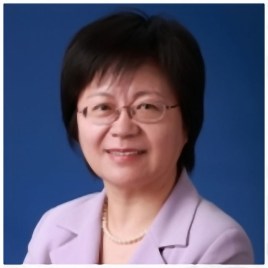 Prof. Xiaoming Tao
Chair Professor of Textile Technology, The Hong Kong Polytechnic University
Prof. Tao is Director of Research Institute of Intelligent Wearable Systems, and Chair Professor of Textile Technology, The Hong Kong Polytechnic University. Prof. Tao is the former World President from 2007 to 2010, and an elected Fellow of the Textile Institute. She is elected Fellow of American Society of Mechanical Engineering and elected Fellow of the Hong Kong Institute of Textiles and Apparel. Prof. Tao is Editor-in-Chief for Handbook of Smart Textiles by Springer, and Associate Editor or Editorial Board Member of more than 10 key academic journals of the field. Prof. Tao is internationally known for her leading research work on intelligent fibrous materials, photonic fibres and fabrics, fibre-based electronic and photonic devices, and wearable technology. Prof. Tao has conducted numerous research projects and published more than 900 scientific publications including over 340 papers in leading international journals like Nature, Nature Electronics, and others, 7 research monographs and 72 patents. Her published work has been cited for more than 20,000 times with H-index of 74 (google scholar).
Presentation Title:
- E-Textiles in Intelligent Wearable Systems for Health Applications
Presentation Summary:
- E-textiles are light, 3D deformable, comfortable and suitable for large-area applications of intelligent wearable systems, especially working as the human-system interface devices, flexible circuit boards or antenna or energy harvesters or storage etc. They can fulfil some useful and unique functions of the intelligent wearable systems and work with microelectronic or micro-mechano-electronic devices featuring high accuracy, reliability based on well established theory and design tools.
The paper presents our recent studies of intelligent wearable systems. The first study developed four new technologies for future supply-chains of medical compression garments, facilitating online digital communication among medical doctors, patients and manufacturers, and remote efficacy assessment of the products. They are: parameterization of 3D scanned lower limb profile data obtained from patients in clinics, CAD/CIM module with database of textile mechanical properties and structures, morphing bionic leg mannequins with in-built accurate pressure measurement networks and size adaptation, intelligent medical compression stockings equipped with new fabric pressure sensors and wireless communication. The customized medical pressure stockings fabricated at our laboratory are assessed in clinical trials at a partner hospital.
The second is an intelligent wearable system for enhancement of mobility of Parkinson Disease patients. The intelligent wearable system is equipped with a reliable and wearable foot plantar pressure sensing network, accurate detection model of abnormal gait with low computing power and wireless smart phone controlled multi-sensory cueing. Its real-time determination of onsets of freezing of gait (FoG), an abnormal walking pattern, with an accuracy of 93.5 % in clinical trials, and provision of visual, auditory or somatosensory cueing with a mean time delay less than 0.5 second. The system improves PD patients’ walking is confirmed by 81% of PD patients, and 70% patients overcame FoG in clinical trials.
 Tony Chahine
CEO, Myant Inc
Tony Chahine is the CEO and founder of Myant Inc, a company based in Toronto, Canada, globally leading the Textile Computing industry. Myant is on a mission to transform human connectedness through textile. It is changing the way people connect to themselves, their communities, and the IoT-enabled world using textiles that can sense and react to the human body, and the AI-enabled Myant Platform. Tony dreams of a future where even the most marginalized people will reap the benefits of technology, and have access, as an example, to remote healthcare. An entrepreneur with a passion for solving problems and revolutionizing the status quo, Tony holds an unwavering belief that everyone should have the right to participate in our connected world. Myant was created with this vision in mind. With a background in electrical engineering, Tony came to Canada in 1990 and quickly saw an opportunity to upset traditional electronics markets with new products and business strategies. In 1992, Tony founded Battery Plus, and in so doing was the first to bring innovative battery technologies to the North American market. He continued innovation in the retail sector by acquiring and transforming companies, with a focus on sustainability and ethically produced goods. The creation of Myant builds on those two decades of experience in electronics and material science, as well as difficult personal family situations, and aims to connect the human operating system to the world around us. Myant is making this a reality with an interdisciplinary team of scientists, engineers, technicians, fashion designers and strategists, and a full end-to-end enterprise. For more information, visit www.myant.ca and www.skiin.com.
Presentation Title:
- Enabling Human Participation in the Future & Revolutionizing Healthcare with Myant
Presentation Summary:
- With the recent launch of Skiin as a textile computing product for society’s most vulnerable and underserved communities, Myant is primed to enable holistic, predictive, and preventative care models in healthcare. In this presentation, Myant Founder and CEO Tony Chahine will highlight why Skiin was brought to market to solve the challenges of episodic care, how Myant has formed the backbone of the nascent textile computing industry, and how these solutions will help patients, their families, and their practitioners drastically improve health outcomes through ambient, continuous connection.
 E-Textiles 2026